
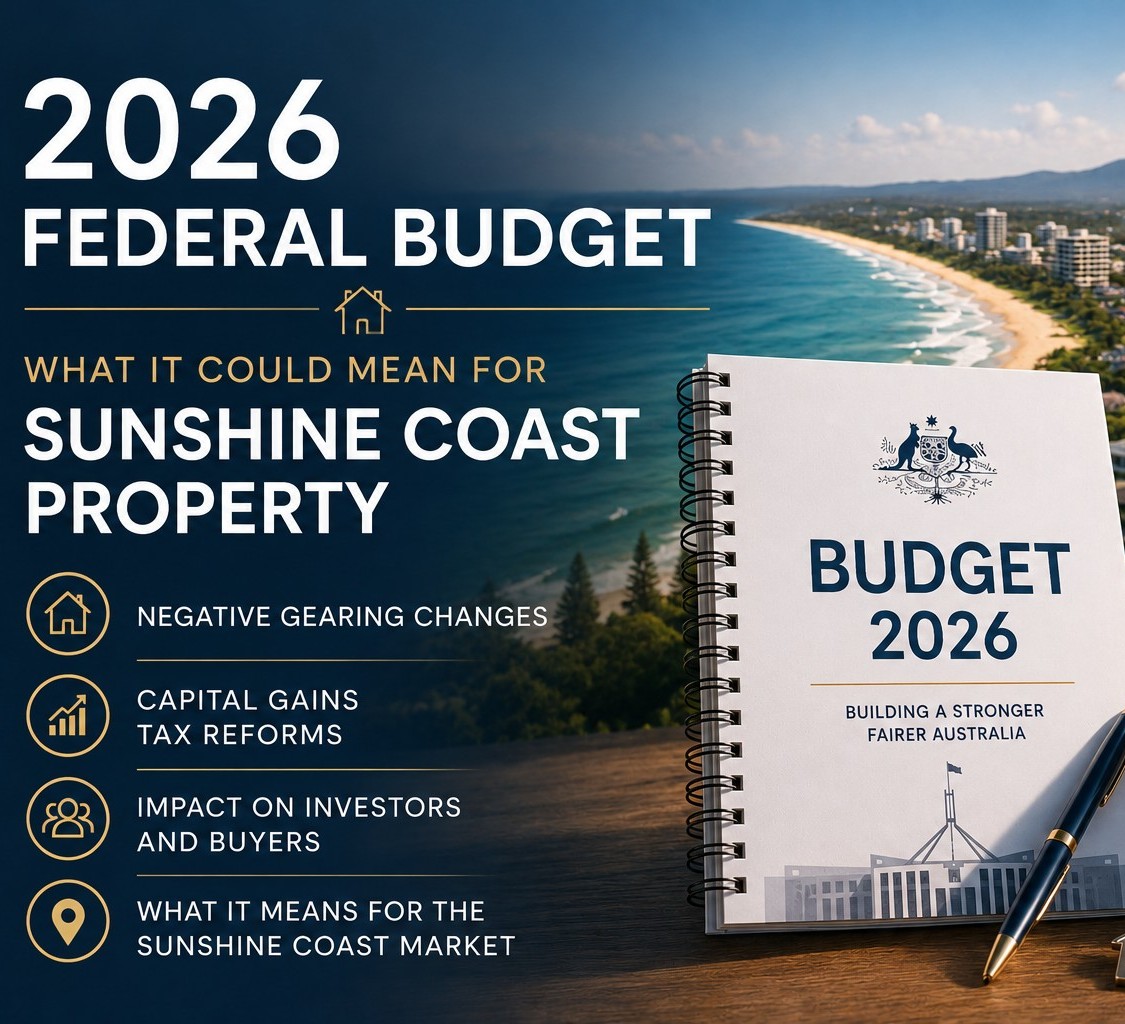
The federal budget announcement has immediately sparked conversations across the property industry, particularly around proposed changes to negative gearing, capital gains tax and discretionary trusts.
While these reforms are still proposals and will need to progress through Parliament before becoming law, they have already created uncertainty among investors, buyers and property owners trying to understand what comes next.
For Sunshine Coast property owners, it is important to separate headlines from practical market reality.
The Sunshine Coast market is driven differently to Sydney and Melbourne
The Sunshine Coast is not purely an investor-driven market, a significant portion of our local demand comes from:
• Interstate migration
• Lifestyle relocations
• Downsizers
• Owner-occupiers
• Self-employed buyers and business owners
• Long-term wealth holders seeking lifestyle assets
This is important because broad national policy changes do not always impact lifestyle markets in the same way they affect heavily investor-concentrated capital city locations.
The fundamentals that continue to support the Sunshine Coast remain unchanged:
• Strong population growth
• Ongoing infrastructure investment
• Limited coastal land supply
• High lifestyle appeal
• Continued rental demand
Proposed changes to negative gearing
The Government has proposed restricting negative gearing benefits on future purchases of established residential property, while continuing concessions for newly constructed housing.
If these reforms proceed in their current form, it could eventually shift investor focus toward:
• New construction projects
• House and land packages
• Duplex and townhouse developments• Off-the-plan opportunities
For established coastal property on the Sunshine Coast, we do not expect quality homes in tightly held locations to suddenly lose appeal. Lifestyle buyers are typically purchasing based on long-term enjoyment, scarcity and location rather than purely tax outcomes.
Rental supply remains a major issue
One area the industry will watch closely is rental supply, the Sunshine Coast already continues to experience tight vacancy rates across many areas, particularly well-located family homes and quality coastal apartments. If investor participation slows over time, this could place additional pressure on rental availability unless new housing supply increases significantly. For landlords holding quality investment properties, strong tenant demand is likely to remain a feature of the market.
What buyers and sellers should actually focus on right now
At this stage, nothing has changed operationally in the market overnight.
Buyers are still making decisions based on affordability, borrowing capacity, lifestyle and confidence in their long-term plans. Sellers are still competing based on presentation, pricing strategy and the quality of their campaign, the bigger risk in markets like this is often hesitation and uncertainty rather than the policy itself.
We expect the coming months will involve:
• Increased conversations around structure and taxation advice
• Greater focus on new-build opportunities from investors
• More scrutiny around holding costs and yields
• Continued demand for quality homes in premium lifestyle locations
The reality for the Sunshine Coast market
The Sunshine Coast property market has consistently shown resilience because demand here is driven by more than investment tax policy alone. People continue to move to the region for lifestyle, flexibility, climate and long-term liveability, while the Budget announcements will create ongoing political and economic debate, quality property in tightly held Sunshine Coast locations is still expected to remain highly desirable over the long term.
As always, buyers and sellers should avoid reacting emotionally to headlines and instead focus on their individual circumstances, long-term goals and quality professional advice.